

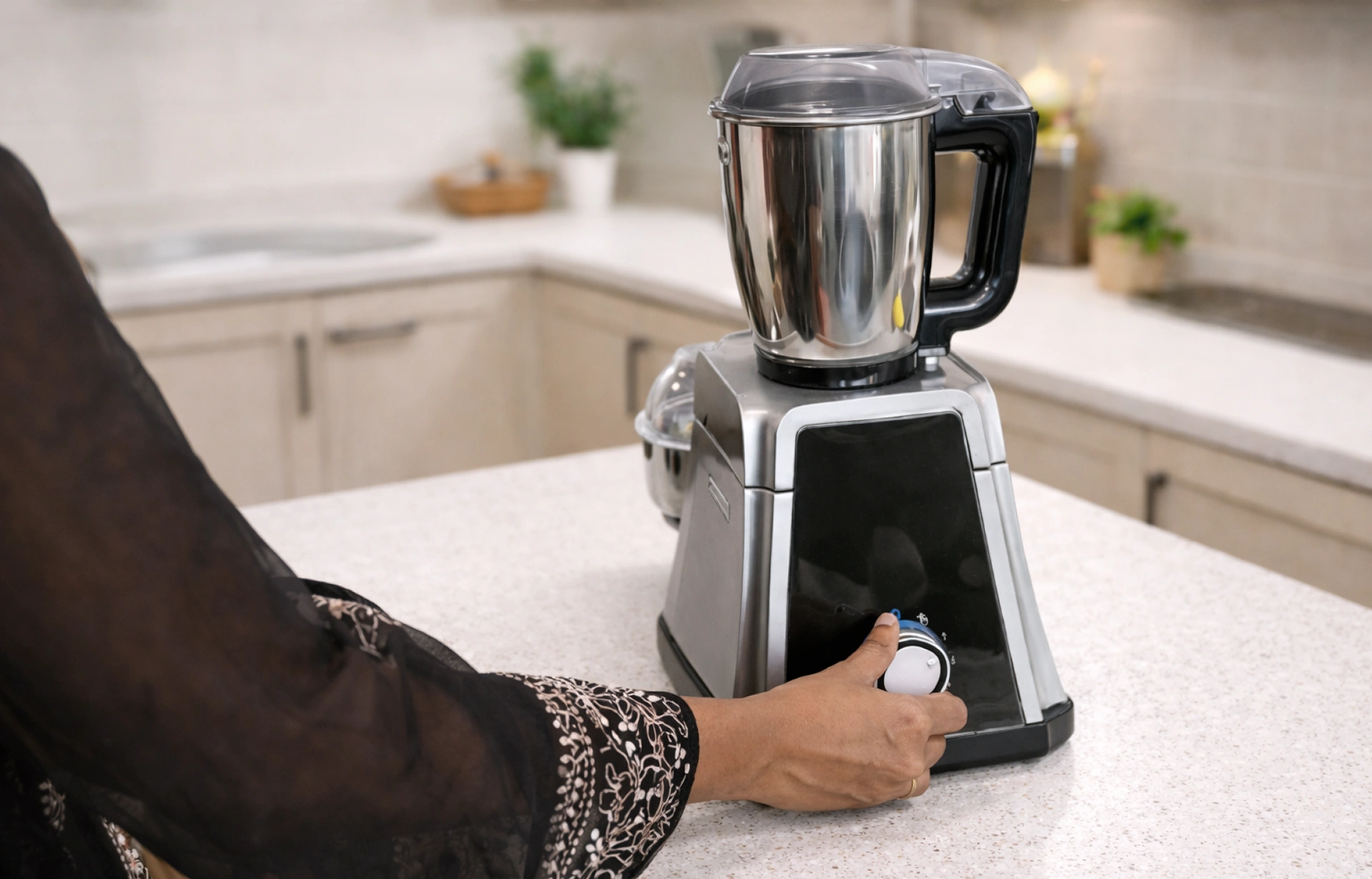
Flora mixer grinder prototype
A premium mixer grinder designed with a strong focus on safety, smart functionality, and refined aesthetics—delivering a reliable and intuitive user experience.
Project Details
Brief, Materials, Process & Validation
Design Scope & Functional Targets
The Flora Mixer Grinder project was initiated to create a benchmark domestic blending appliance combining high-torque processing power with an elegant, modern form factor. The client brief required resolving chronic domestic kitchen pain points: messy jar-lock failures, motor overheating during continuous spice grinding, high noise resonance, and difficult-to-clean base contours. The objective was to design and manufacture a fully functional, production-intent prototype for aesthetic, ergonomic, and CMF sign-off.
Engineering Materials & Surface Finishes
Utilized premium food-grade and engineering-grade polymers engineered for high mechanical impact, thermal stability, and vibration dampening. The main chassis is vacuum-cast in high-impact ABS with flame-retardant properties (UL94-V0) and finished with a fingerprint-resistant satin CMF coating. Blending jars were fabricated from heavy-gauge surgical AISI 304 stainless steel with laser-welded ergonomic handles and food-certified silicone perimeter seals. Critical high-speed drive couplers were CNC machined from wear-resistant Delrin (POM) and brass inserts.
Model Making & Rapid Tooling Workflow
Executed an agile multi-stage prototyping pipeline: high-resolution stereolithography (SLA) printing for initial volumetric validation and grip evaluation, followed by precision silicone tooling. Five complete sets of prototype housings were vacuum-cast under temperature-controlled conditions to ensure consistent wall thickness, draft angles, and robust snap-fits. Secondary post-processing included hand-sanding down to 800 grit, dual-coat polyurethane primer, custom pantone metallic paint application, and UV-curable matte protective clear coat.
Quality Benchmarking & Ergonomics
The functional prototype underwent intensive bench testing: continuous 15-minute heavy-load grinding cycles to validate thermal airflow routing and motor heat dissipation, acoustic decibel analysis showing a 6.5 dB reduction versus competitor baselines, and a 1,000-cycle jar-locking mechanism fatigue check to verify mechanical switch latching tolerances without wear or play.
What We Set Out to Solve
Integrating multiple safety and control features without visual clutter Ensuring ease of use while maintaining a premium appearance Simulating production-level look and feel at prototype stage
How We Approached It
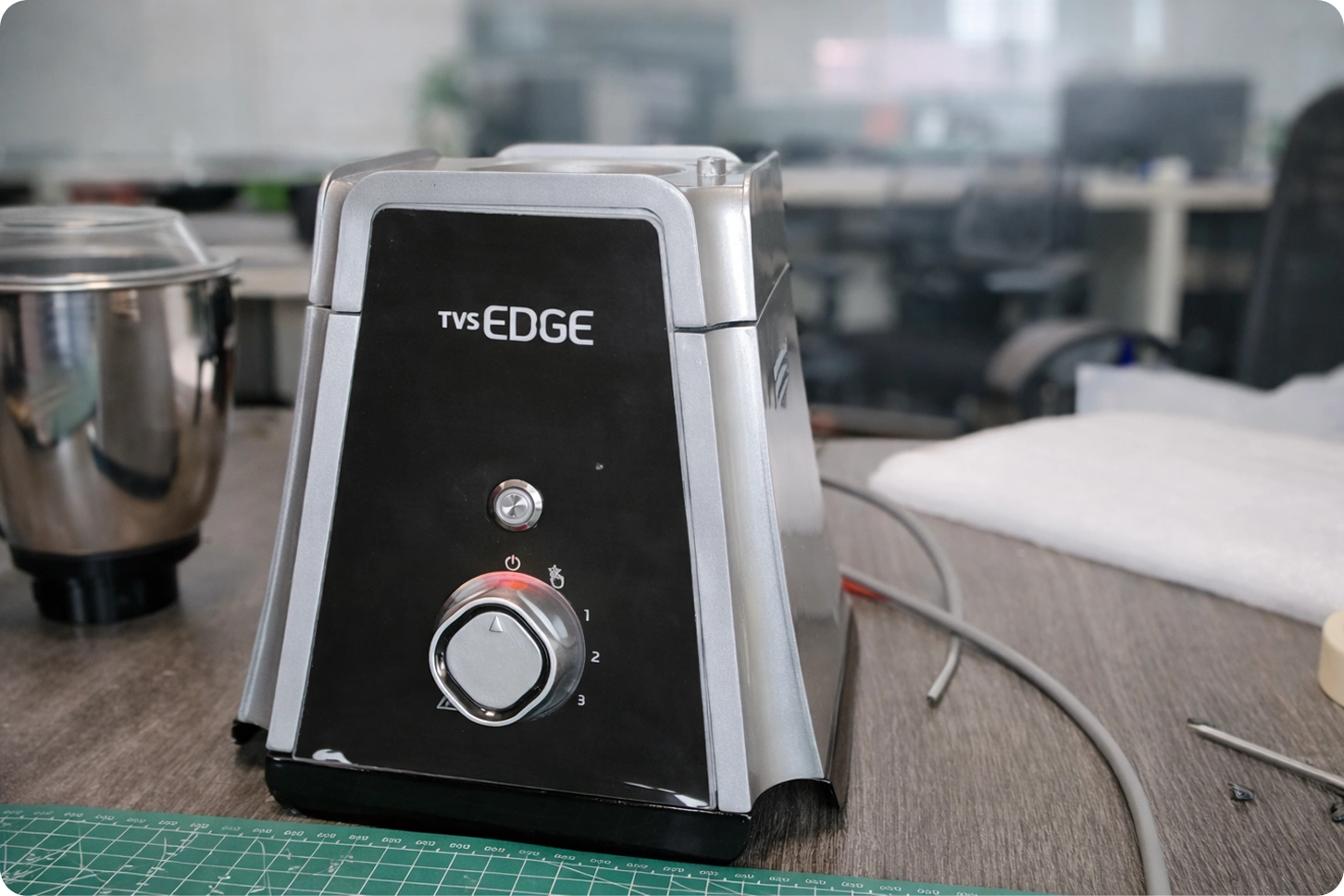
Jar lock-on safety mechanism Reverse motor function to prevent jamming Multiple operating modes Clear, intuitive display for user control Vacuum casting using ABS, PC, and Rubber to achieve realistic finish and tactile quality
From Concept to Completion
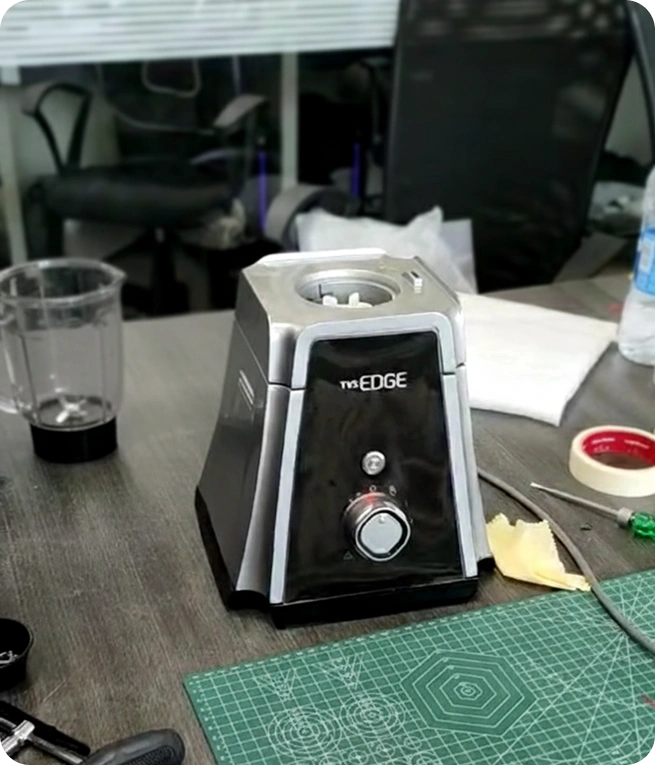
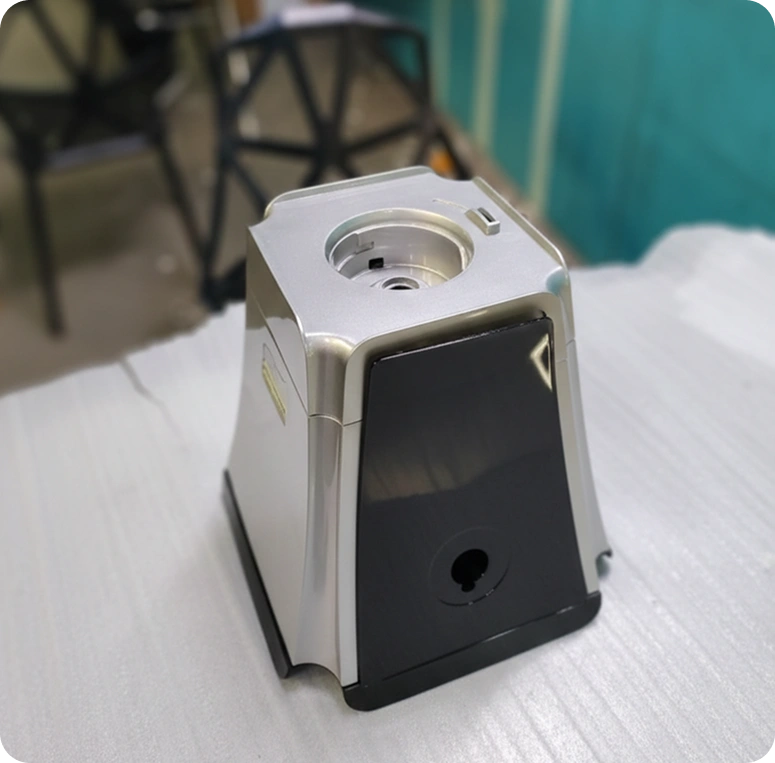
The complete prototype development journey for this project.
Master Making
A high-quality master model is created based on the final design. This master is used as the reference for mould making.
Silicon Mould Making
Silicone moulds are prepared using the approved master model.These moulds enable accurate replication of parts.
Vacuum Casting
Parts are produced by casting material into silicone moulds under vacuum.This process ensures good surface finish and consistent quality.
Post Process and final Finishing
Cast parts are cleaned, trimmed, and surface-finished. Final touch-ups are done to achieve the required look and fit.
Ready to Build Your Prototype?
Let's discuss your project and bring your vision to life with precision manufacturing.