

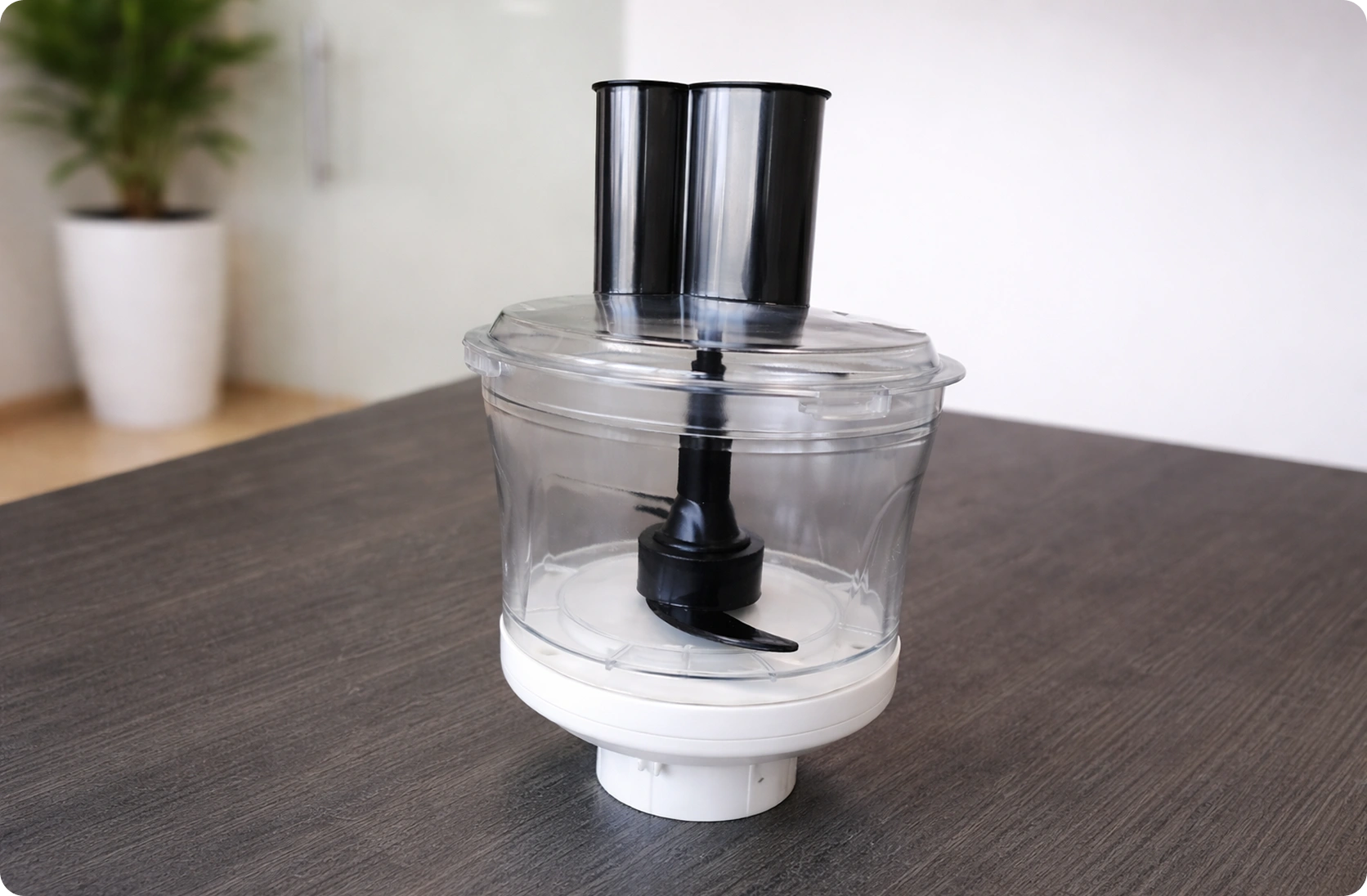
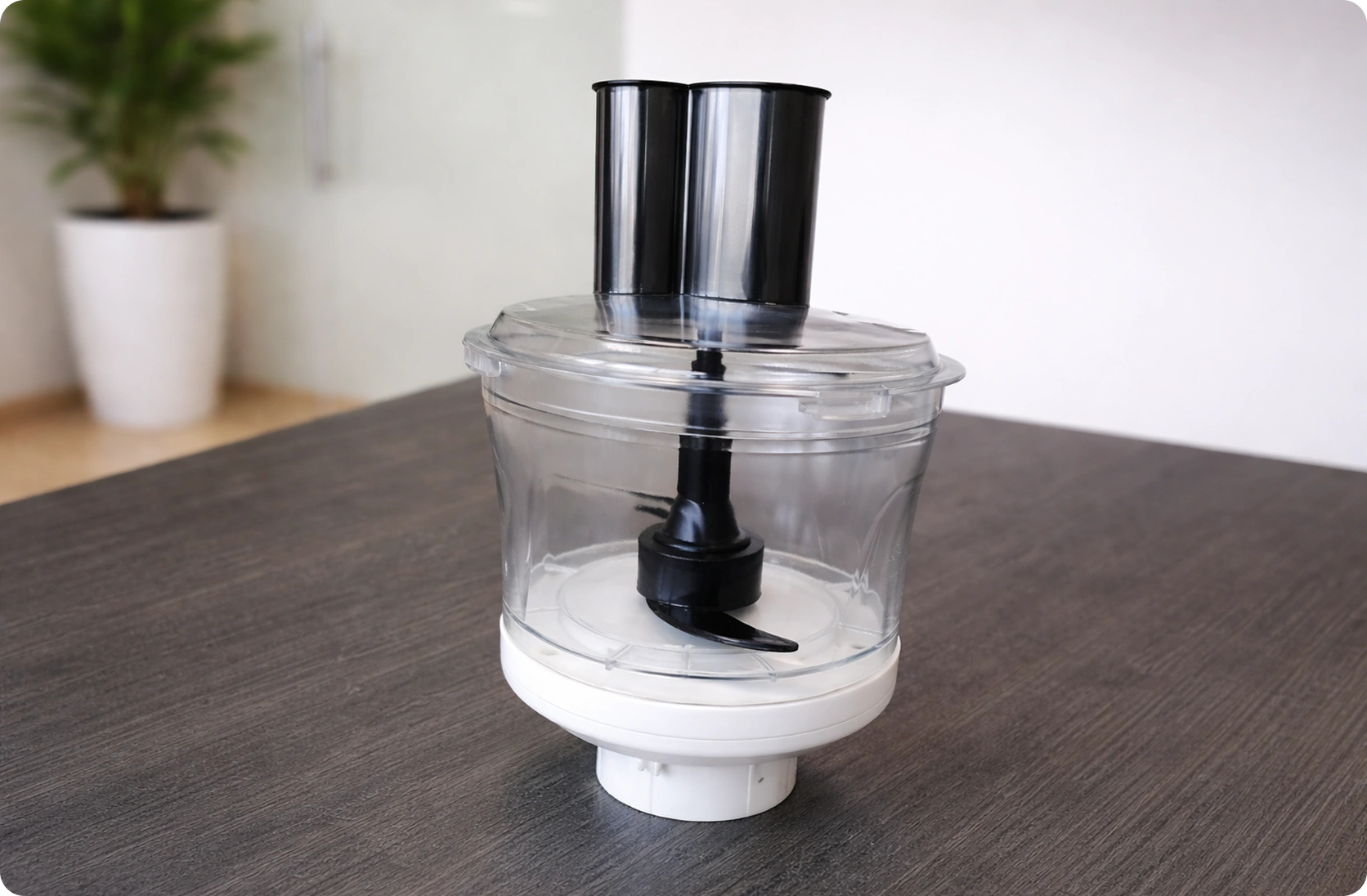
Food processor prototype
To engineer a robust and efficient food processor system with a focus on high-torque performance, safety, and durability—while delivering consistent results for demanding applications such as atta kneading and slicing, supported by a refined and user-friendly aesthetic.
Project Details
Brief, Materials, Process & Validation
Design Scope & Functional Targets
The FOOD PROCESSOR prototype project was commissioned to evaluate industrial design ergonomics, aesthetic proportions, and mechanical assembly feasibility before high-volume tooling. The brief specified an elevated brand aesthetic, intuitive operator touchpoints, and structural ribbing engineered for production manufacturability.
Engineering Materials & Surface Finishes
Fabricated using production-intent engineering materials: Plastic. Key structural enclosures utilize vacuum-cast flame-retardant polyurethanes with custom CMF satin finishes, paired with precision CNC-machined metal fasteners and wear-resistant bushing inserts.
Model Making & Rapid Tooling Workflow
The prototyping process utilized high-precision stereolithography (SLA) 3D master prints for dimensional fit checks, followed by room-temperature vulcanizing (RTV) silicone tooling. Parts were vacuum-cast to achieve uniform wall thickness and sharp character lines, followed by hand-sanding, priming, custom metallic CMF painting, and UV-cured topcoat.
Quality Benchmarking & Ergonomics
Validation protocols included mechanical drop and vibration testing, continuous duty-cycle thermal airflow logging, parting line alignment checks under simulated operating loads, and tactile feedback evaluation across targeted user cohorts to confirm production readiness.
What We Set Out to Solve
Designing a compact, high-torque gearbox capable of sustained atta kneading without overheating or wear. Developing efficient and safe blade profiles for both atta kneading and slicing applications. Optimizing material selection to balance strength, food safety, noise, wear resistance, and cost.
How We Approached It
Redesigned the gearbox with optimized gear ratios and load paths for improved torque and durability. Engineered application-specific blades for effective kneading and consistent slicing performance. Finalized food-grade materials suitable for performance, manufacturability, and long-term use.
From Concept to Completion
The complete prototype development journey for this project.
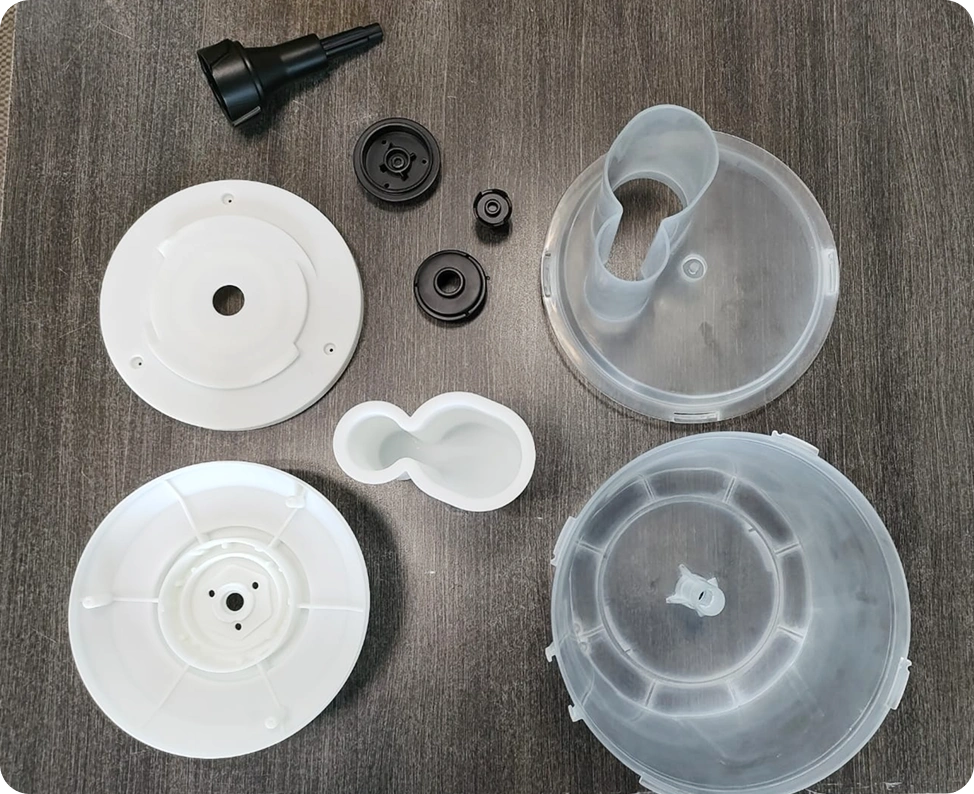
SLA-ABS RPT – 3D Printing
Prototype parts are 3D printed using ABS-like material, Nylon base material based on the final design.This stage creates accurate parts for size, fit, and overall evaluation.
Post Processing
Printed parts are cleaned and support material is removed. Surfaces are refined to achieve a smooth finish before painting.
Final Painting & Surface Treatment
Parts are painted to match the required color and surface finish. Surface treatment enhances appearance and visual quality.
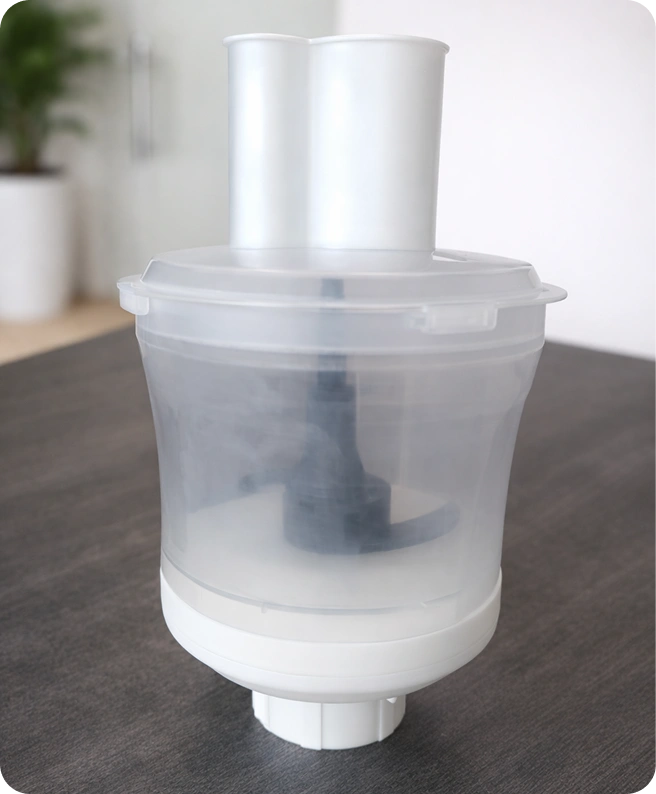
Assembly
All finished parts are assembled into a complete prototype. Final checks are done to ensure proper fit and alignment.
Ready to Build Your Prototype?
Let's discuss your project and bring your vision to life with precision manufacturing.